On curiosity, serendipity, and the unexpected pleasures of a wandering mind
One of my favorite experiences in life is stumbling across something interesting and suddenly realizing it connects to something else I've been thinking about. It might be a passage in a book, a conversation with someone I barely know, or something I came across while researching an entirely different subject. Sometimes the connection is obvious, but often it's just a hunch, a little spark of recognition that makes me think there's something here worth exploring. I love those moments, particularly when they send me off in a direction I had absolutely no intention of going.
I've come to think of these little adventures as side quests, and I'm a big believer in making room for them. They're often unrelated to whatever I was supposed to be doing, and occasionally they lead nowhere particularly useful. But every now and then, something I discovered weeks, months, or even years earlier suddenly connects with another experience, and an idea that had been quietly sitting in the back of my mind takes on an entirely new meaning. It's one of the great pleasures of being curious.
Do more things you’ve never done just for the fun of it and lose the fear of failure
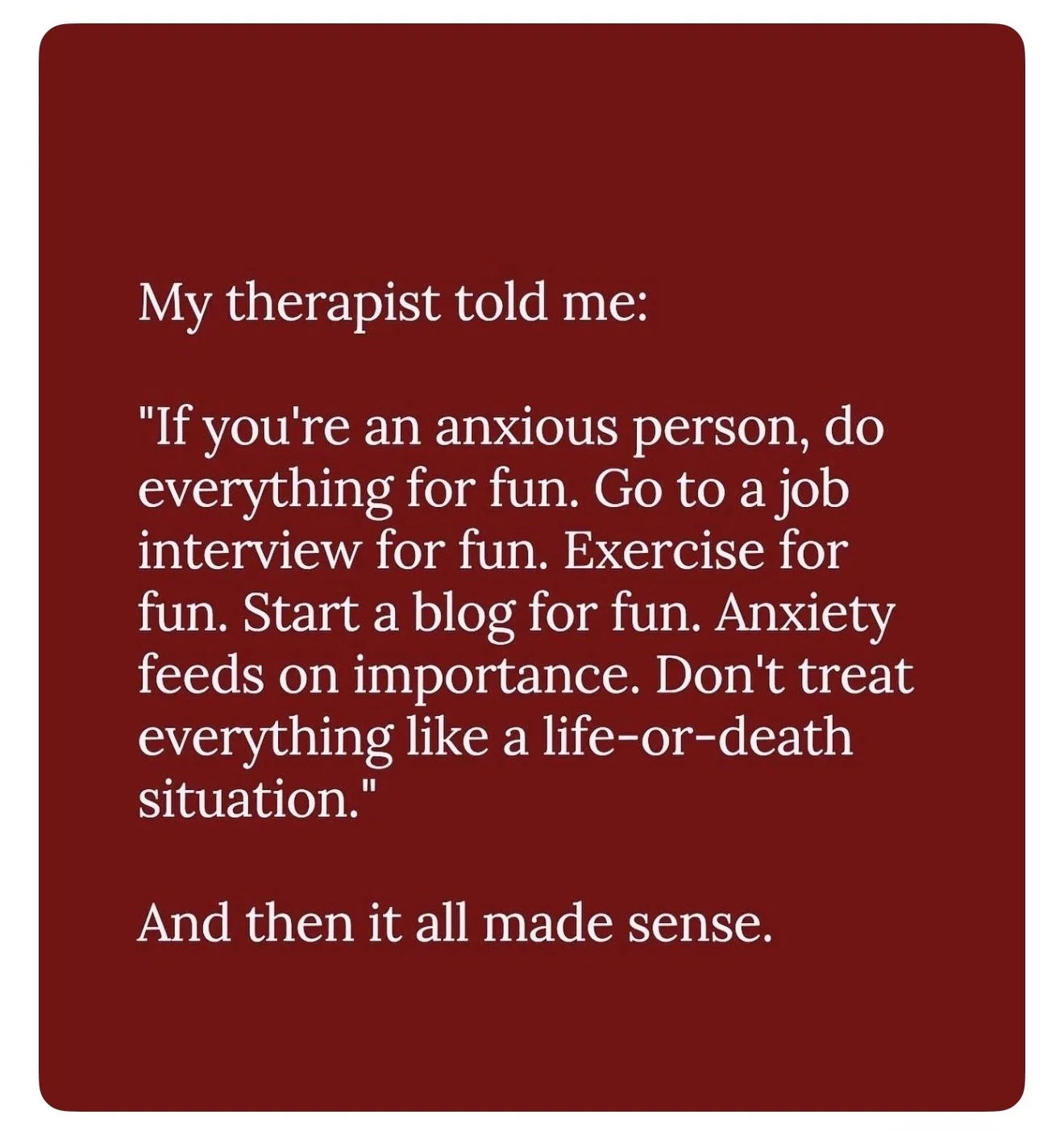
I recently came across a quote attributed to a therapist who suggested that people struggling with anxiety should try approaching more of life's activities as though they were doing them for fun. Go to a job interview for fun, exercise for fun, start a blog for fun. Stop treating everything like a life-or-death situation. I thought that was wonderful advice, and not just for people who experience anxiety. We seem to have developed a habit of attaching expectations to nearly everything we do, including our leisure activities. We exercise to improve our health, read to become more knowledgeable, and learn new skills to advance our careers. Even our hobbies can become little projects with objectives and milestones. Somewhere along the way, we've made it surprisingly difficult to enjoy doing something simply because it interests us.
There's an old observation attributed to Louis Pasteur: “chance favors the prepared mind.” I'd add that it also favors the curious mind. Serendipity is often described as accidentally discovering something valuable, but I think curiosity plays an essential role in recognizing the opportunity. Two people can encounter exactly the same thing and come away with entirely different experiences. One moves on, while the other notices a connection, starts asking questions, and wanders off to investigate. The more varied our interests and experiences, the more opportunities we have to make those connections.
Steven Johnson explores a similar idea in his book Where Good Ideas Come From, in which he describes the "slow hunch." Rather than arriving in a sudden flash of inspiration, many ideas develop gradually as fragments of knowledge accumulate, sometimes over years, until something brings them together. I find this particularly appealing because it suggests that our seemingly random interests may be contributing to something we don't yet understand. A conversation about architecture might eventually influence how we think about organizations, or something we learn while cooking might illuminate a problem at work. We can't predict these connections, but we can certainly give them more opportunities to happen.
I'm currently reading Mason Currey's Daily Rituals: How Artists Work, a delightful collection of the working habits of writers, composers, painters, and other creative people. What's fascinating is how differently they organized their lives. Some followed almost military routines, while others took long walks, worked peculiar hours, or developed wonderfully eccentric habits. There doesn't appear to be a universal formula for creativity, though many of these people seemed to understand the importance of letting their minds wander. A walk, an unexpected conversation, or an afternoon spent reading something unrelated to your current project isn't necessarily time wasted. Sometimes it's precisely what allows an idea to develop.
This also has implications for how we work. I was listening recently to a podcast featuring Josh Woodward from Google Labs, who described how some of the most interesting ideas emerge not from organized brainstorming sessions but from small groups of people who become fascinated by something and start experimenting simply because they can't help themselves. He also talked about keeping his team close to the frontier of what's becoming possible, particularly with AI. They explore technologies that aren't quite ready and ideas that don't yet have obvious applications, knowing that a new capability might suddenly make something possible that wasn't possible six months earlier.
I love that mindset, and it resonates with my own experience building businesses. I'm a big believer in clear goals, accountability, and disciplined execution, but I've also seen how easily organizations can become so focused on getting things done that they leave little room for discovering what might be worth doing in the first place. Some of the most interesting ideas I've encountered in business have come from unexpected conversations, reading outside my field, or following an interest that initially seemed completely unrelated to work. The challenge is creating an environment where people feel comfortable exploring those interests without needing to justify every hour against an immediate outcome.
I sometimes wonder whether we've become so preoccupied with making the most of our time that we're missing some of the experiences that make life enjoyable. We have work goals, fitness goals, financial goals, and personal development goals, all competing for space on calendars that are already overflowing. There's nothing inherently wrong with any of that, and I certainly do plenty of it myself. But when every activity needs a purpose and every hour is accounted for, we leave ourselves precious little room for surprise.
Perhaps the simplest change is to become a little more comfortable doing things without knowing where they'll lead. Pick up a book because its title catches your attention, strike up a conversation with someone whose experiences are completely different from yours, or spend an afternoon exploring something you've always wondered about. You don't need to become an expert, produce anything, or even finish what you started. Sometimes an interest fades after an hour, and sometimes it develops into something that stays with you for years. Either outcome is perfectly fine.

Follow that rabbit down the hole!
I've been fortunate to spend much of my life following things that interest me, often without any particular expectation of where they might lead. Looking back, some of my most meaningful experiences and opportunities came from directions I never could have anticipated. And while I enjoy the occasional discovery that turns out to have real significance, I've come to appreciate that the smaller adventures are just as worthwhile. They make ordinary days more interesting, introduce us to unfamiliar perspectives, and remind us how much there is in the world that we haven't yet explored.
So the next time something catches your curiosity, consider following it a little further, even if it has nothing to do with what you originally set out to accomplish. You might discover something extraordinary, or you might simply enjoy an unexpected adventure. Either way, you've made your day a little more interesting, and that's a pretty good return on your time.