When Worlds Collide
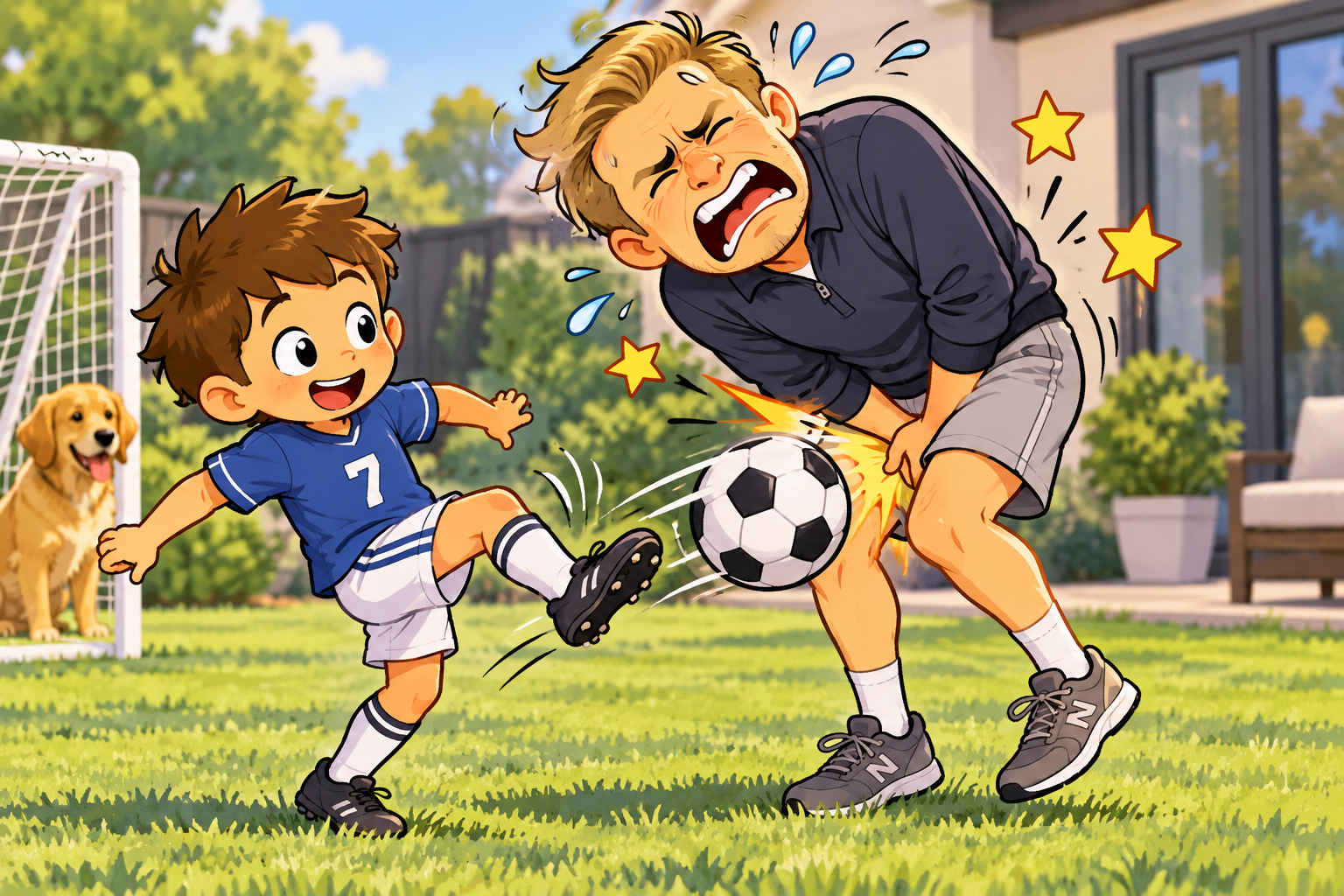
Everyone has a different perspective of the exact same event!
In late November 2025, I went in for what I thought was a routine annual checkup and came out with a diagnosis of liver cancer.
There are moments in life that divide everything into before and after, and this was certainly one of mine. Since then, I’ve become pretty good at telling the story from my point of view. I can recount the scans, the doctors, the treatments, the difficult decisions, the uncertainty, the hospitals, the transplant and now the recovery. I can tell you what happened to my body, what went through my head, what frightened me, what surprised me, and what I learned along the way.
Recently, at a Yodo1 All Hands meeting, I tried to tell that story to my team. In about twelve minutes, I gave them my version of what had happened over the previous ten months and what the experience had come to mean to me. My journey, from my point of view.
But lately I’ve been thinking about another part of the story—one that I haven’t spent nearly as much time considering. Because, of course, there isn’t just one version of what happened.
YOUR CRISIS IS NEVER YOURS ALONE
When something as consequential as cancer happens to you, it’s natural to experience it primarily as something happening to you. I was the person with cancer. I was the one lying inside the MRI machine, meeting surgeons, considering treatment options and eventually having my liver removed and replaced with someone else’s.
But I wasn’t the only person living through it.
My wife was living through it. My family and friends were living through it. The people I work with were living through it. They were watching the same events unfold, dealing with their own uncertainty, changing plans, worrying, helping and trying to figure out what all of this might mean.
And then there was my seven-year-old son, Winston.
Of all those different perspectives, his was perhaps the one I understood least. I knew what I had tried to explain to him, of course, but that isn’t the same thing as knowing what he actually understood. Nor did I really know what the experience had been like from his side of the room.
So recently, I decided to ask him.
WHAT DOES CANCER LOOK LIKE WHEN YOU’RE SEVEN?
I didn’t want to sit Winston down and explain my cancer to him again. I wanted to do almost the opposite. I wanted him to explain it to me.
What did he think had happened to Daddy? What did he understand about cancer, the liver, and the transplant? When he looked at the large scars across my abdomen, what did he think had happened there? What did he remember about all those months when Daddy was constantly talking to doctors, spending months at a time overseas, disappearing into hospitals, having procedures, and generally being unable to do the things we normally did together?
And beyond the medical facts, I wanted to understand something much more important: What had all of this been like for him?
We talked for 24 minutes.
And Winston gave me his view of Dad’s cancer journey and how it affected his life and his relationship with both dad and mom. I expected his answers to be interesting. What I didn’t expect was how strange it would feel to hear someone describe a year I knew so intimately and realize that he had experienced an entirely different version of it.
It was the same cancer, the same hospitals, the same family, and the same year. But it wasn’t quite the same story.
SAME STORY, DIFFERENT REALITY
As adults, we tend to turn difficult experiences into narratives. We construct timelines, establish cause and effect and organize uncertainty into something we can understand: diagnosis, treatment, decision, procedure, recovery, next step. We pack them up neatly into soundbites we can deliver to people we see at the grocery store or in social gatherings. Perhaps it gives us some sense of control over events that are otherwise largely beyond our control.
Children don’t necessarily experience life that way. And they certainly don’t care about crafting convenient soundbites for public consumption.
For Winston, the past year wasn’t a medical narrative. It was life happening around him in fragments. Daddy wasn’t home. Daddy was tired. Daddy was talking to doctors again. Daddy was overseas and not at home for months at a time. Plans changed frequently. We moved. The relationshiip dynamic with his mom and the amount of time they spent together on a daily basis changed. Something called cancer was happening. Then Daddy went into the hospital and eventually came home with an enormous scar and, somehow, a different liver inside him.
Everyone said Daddy was going to be okay.
But what exactly does all of that mean when you’re seven years old?
Our conversation reminded me that children can understand both far more and far less than we imagine. They listen when we don’t think they’re listening. They watch our faces, notice changes in routine, and know when something is wrong long before anyone formally explains it to them. They collect all those little pieces of information and assemble their own picture of what is happening.
Sometimes that picture is remarkably accurate. Sometimes it isn’t. And sometimes the things that loom largest in their minds are completely different from the things that seem important to us adults.
That was probably what surprised me most about talking with Winston. I had spent months thinking about cancer in terms of tumors, treatments, probabilities, transplant lists, and survival. He had spent those same months experiencing what those things actually did to our family and his daily life.
WHEN WORLDS COLLIDE
There is a kind of unavoidable egocentricity built into adversity. I don’t mean selfishness; I mean perspective. When you’re dealing with cancer, losing a job, going through a divorce, caring for a sick parent, struggling with a company, or facing some other serious disruption, your attention naturally collapses toward the problem immediately in front of you.
It has to. There are decisions to make and consequences to manage.
What is easier to miss is that while you’re doing that, the shock waves keep traveling outward.
The people around you develop fears you may never hear about. They change their lives in ways you may barely notice. They create explanations for things you haven’t adequately explained and find their own ways of coping with circumstances they didn’t choose. Sometimes they carry pieces of your burden without ever telling you that they’re carrying them.
Your problem has entered their world. And once it does, it becomes part of their story too.
That’s where worlds collide.
TWO VIDEOS, ONE EXPERIENCE
There is something particularly interesting about putting these two videos side by side.
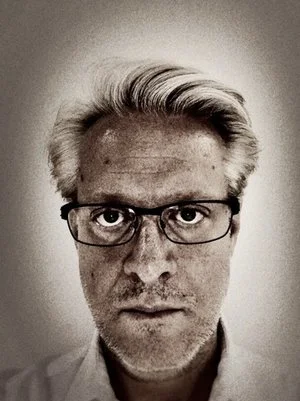
In the first, I’m speaking to my company. I’m sixty years old and have spent much of my adult life building businesses, solving problems, making decisions, and trying to turn complicated situations into something understandable. I’m looking back at an extraordinary series of events and trying to make sense of them. Inevitably, I’m imposing a narrative on what happened.
Then there is Winston.
He’s seven.
He lived through exactly the same period, but he experienced it from three feet closer to the ground and with fifty-three fewer years of life experience. He wasn’t studying treatment options or thinking about survival statistics. He was watching his dad.
Neither version is the correct one. Both are true.
And perhaps that’s the bigger lesson I’ve taken from this.
We tend to believe that events have a story, but they don’t. People have stories about events. Put ten people close enough to something consequential, and you will eventually discover ten different versions of what happened, shaped by what each person saw, understood, feared, needed, and loved.
THE QUESTION I SHOULD HAVE ASKED EARLIER
Talking with Winston made me realize something embarrassingly simple: I should ask more questions to uncover his views and perceptions. Stop assuming things and thinking like an adult all the time.
When something difficult happens in our lives, we understandably spend enormous amounts of time asking, What am I going to do? What happens next? How do I solve this? Those are necessary questions, and sometimes they consume nearly all of our available energy.
But there is another question that might be worth asking the people standing closest to us:
What has this experience been like for you?
Ask your spouse. Ask your children. Ask your parents. Ask your closest friends. Maybe even ask the people you work with.
And then comes the difficult part: resist the temptation to explain, correct, reassure, or tell them what really happened. Listen long enough to discover the version of the story they have been living, because you already know yours.
Theirs is the one you haven’t heard yet.
THE VIEW FROM THE OTHER SIDE
I wouldn’t wish cancer on anyone, and I certainly wouldn’t choose the past ten months as the way to learn something I probably should have understood already. But this experience has reminded me, more powerfully than almost anything else in my life, that none of us experiences the important things alone.
Our lives constantly spill into one another. Our joy does, but so do our fears, our decisions, our mistakes, our illnesses, and, thankfully, our recoveries.
We sometimes imagine that protecting the people we love means shielding them from the difficult things happening to us. There may be times when that’s true, particularly with children. But perhaps another part of loving them is recognizing that, whether we intended it or not, they’ve already been on the journey with us.
They just traveled a different road.
So every once in a while, while we’re busy staring at the enormous thing that has happened in front of us, it might be worth turning around and looking at the people who have been standing beside us all along.
Then ask them what they saw. You might be surprised by the answer.
I was.